AI-Planned Gum Aesthetics
AI Smile Makeover & Gum Contouring in Istanbul
AI gum contouring at AIDENT Clinic measures your gum line, tooth proportions and lip movement from photos, video and 3D scans, so the gum frame of your smile is reshaped with precision and in the right order with any other cosmetic work. Dr. Abdurrahman Öztürk reviews every simulation and makes every clinical decision.
 Medically reviewed by Dr. Abdurrahman Öztürk, PhD, oral & maxillofacial surgery
The model shows how excess gum covering the front teeth is trimmed to reveal more natural tooth length while keeping a healthy tissue band above the bone. AI uses this kind of model to preview the change before any treatment.
Short answer
What is AI gum contouring?
AI gum contouring is the reshaping of an uneven or excessive gum line, planned with software that analyzes your smile photos, video and 3D scans. The AI measures tooth proportions and gum display and simulates a new gum line; the dentist checks bone levels clinically, approves the plan and usually reshapes the tissue with a dental laser.
- Main technique
- Laser or scalpel gingivectomy / gingivoplasty
- Anesthesia
- Local anesthesia, patient awake
- Chair time
- Often about one hour, depending on the number of teeth
- Supervision
- Dr. Abdurrahman Öztürk, 15+ years of experience
AI
How AI plans your gum contouring and smile makeover
A gum line cannot be judged from a single photo. At AIDENT the smile frame is studied in layers, with AI handling measurement and simulation and the dentist handling diagnosis and every final decision.
- 1
Smile photos and video
You send front and side photos plus a short video of you talking and laughing. AI uses these to estimate how much gum you show at rest and in a full smile.
- 2
Gum-line and proportion mapping
Software traces the gum margins, the height and width of each front tooth and the symmetry between left and right, flagging zones that look too short or uneven.
- 3
Intraoral 3D scan
A digital scan records the exact shape of teeth and gums, giving the AI a precise surface for the planned new gum outline.
- 4
X-ray and bone assessment
Radiographs, and CBCT when needed, show where the bone sits under the gum. This decides whether simple soft-tissue contouring is enough or whether bone also needs attention.
- 5
New gum-line simulation
The AI proposes a revised gum outline and previews it together with any planned whitening, bonding or veneers, so you see the whole makeover as one design.
- 6
Doctor review and approval
Dr. Öztürk measures the gums clinically, adjusts the digital design where anatomy requires, and approves a final plan that you discuss and agree to.
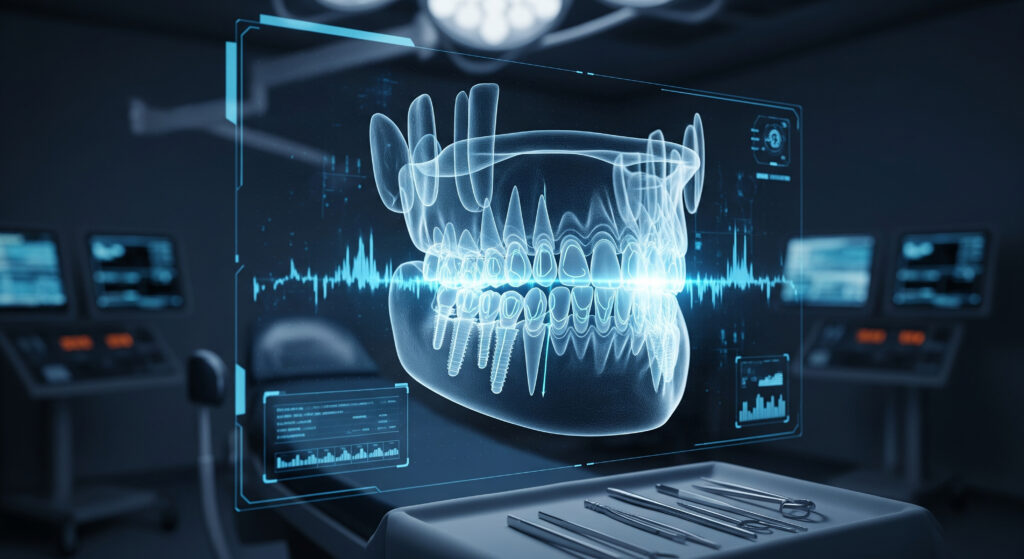
Illustration of AI-assisted analysis. Final diagnosis is always made by the dentist after a clinical examination.
AI image analysis
See how AI reads your scan before the doctor decides
Every panoramic X-ray, CBCT scan and smile photo you send is analysed by AI first. It maps bone, nerves, roots and soft tissue, flags areas that need attention and prepares measurements. Dr. Abdurrahman Öztürk then reviews every finding and makes the clinical decision.
What an AI smile makeover with gum contouring involves
A smile is made of three elements: the teeth, the lips and the gums that frame the teeth. Many people focus only on tooth colour and shape, yet a gum line that is uneven, too low or that covers short-looking teeth can make even well-shaped teeth look small or crooked. Gum contouring is the procedure that reshapes this frame by removing or sculpting a small amount of gum tissue, and it is often the first step of a wider smile makeover.
In an AI smile makeover at AIDENT Clinic, gum contouring is not planned in isolation. Software analyzes your face, lip line and tooth proportions together, and simulates how a new gum outline would combine with any whitening, bonding or veneer work. This matters because the final length and shape of veneers depend on where the gum line ends up. Dr. Abdurrahman Öztürk uses the simulation as a guide, confirms what is realistic for your anatomy, and decides the treatment order.
- Levelling an uneven gum line between left and right sides
- Reducing excess gum display in a gummy smile, when the cause is tissue
- Lengthening teeth that look short because gum covers them
- Preparing a balanced gum frame before veneers or crowns
- Removing gum overgrowth after orthodontic treatment, once inflammation is controlled
Why a gummy smile happens and when gum contouring is the answer
A gummy smile has several possible causes, and the cause decides the treatment. In many adults the gum simply never moved back fully after the teeth erupted, so it still covers part of the enamel; dentists call this altered passive eruption. Gum tissue can also thicken after braces, from some medications or from poor cleaning. In other people the teeth and gums are normal, but the upper lip lifts unusually high when smiling, or the upper jaw is vertically long.
Gum contouring corrects tissue-related causes. It cannot shorten an overactive lip or a long upper jaw, and trimming gum in those cases would expose root surfaces or simply look wrong. This is where AI analysis helps: by comparing tooth proportions, lip movement in your video and gum height, the software highlights which factor is dominant. Dr. Öztürk then confirms the diagnosis clinically and, if the main cause is muscular or skeletal, explains the alternatives honestly rather than offering a procedure that will not solve the problem.
Tissue causes that contouring can treat
Altered passive eruption, gum overgrowth and uneven gum margins between neighbouring teeth usually respond well to gingivectomy or gingivoplasty, sometimes combined with bone recontouring.
Causes that need a different approach
A hypermobile upper lip or vertical excess of the upper jaw may be managed with lip-repositioning procedures, injectable muscle relaxants by a qualified practitioner, orthodontics or jaw surgery, depending on severity.
Laser gum contouring, scalpel technique and crown lengthening
When only soft tissue needs reshaping, the procedure is called a gingivectomy, and fine sculpting of the gum surface is called gingivoplasty. At AIDENT this is usually performed with a dental soft-tissue laser, which cuts and seals small blood vessels at the same time. Patients typically notice less bleeding during treatment and a neat margin afterwards. A conventional scalpel remains a valid option and can be preferable for thicker tissue or certain shapes; the choice is clinical, not marketing.
If the bone sits too close to the planned new gum line, removing gum alone is not enough. The gum would tend to grow back to its previous level to protect the natural attachment zone around the tooth. In that situation aesthetic crown lengthening is needed: a minor surgical procedure in which the bone edge is also gently recontoured so that a healthy band of tissue can form above it. Crown lengthening takes longer to heal and is planned with more care.
- Gingivectomy: removal of excess gum tissue
- Gingivoplasty: smoothing and sculpting of the gum surface
- Aesthetic crown lengthening: gum and bone reshaping for lasting tooth length
- Laser and scalpel are both accepted tools; Dr. Öztürk chooses per case
How AI measures the gum line before any tissue is removed
Gum contouring is irreversible in one direction: tissue removed cannot simply be added back without grafting. Careful measurement is therefore the most important part of the treatment. AI-assisted planning supports this by tracing gum margins on the 3D scan, comparing the width-to-length ratio of each front tooth with common aesthetic guidelines, and checking symmetry around the facial midline. The software also estimates how the new gum line would sit relative to your upper lip in a full smile.
These digital measurements are combined with clinical ones that no camera can replace. With the area numbed, the dentist gently probes to feel where the bone lies beneath the gum, a step known as bone sounding. Together with X-rays, this reveals whether the planned outline respects the tissue the tooth needs for long-term health. Dr. Öztürk adjusts the AI proposal accordingly, and the approved outline can be transferred to the mouth with a printed guide or marked directly before treatment.
What AI contributes
Consistent measurement of tooth proportions, symmetry analysis, comparison of design options and a visual preview of the gum line combined with other cosmetic work.
What only the dentist can assess
Gum thickness, bone position, inflammation, tooth mobility and the overall health of the mouth, which decide whether contouring is safe and how much can be done.
Fitting gum contouring into the rest of your smile makeover
Order matters in a smile makeover. Gum health comes first: if there is bleeding, tartar or active gum disease, it is treated before any cosmetic work. Gum contouring then usually comes before final veneers or crowns, because the edge of a ceramic restoration is designed around the gum margin. If the gum is moved after veneers are made, the edges may become visible or the proportions may no longer match.
For simple laser contouring, the gum generally settles within a few weeks, and the final shade and impression for ceramics may be taken once the margin has stabilized. After crown lengthening that includes bone, dentists commonly wait longer so the tissue matures before final restorations. Whitening is often done before ceramics so their shade can be matched to the brighter natural teeth. AI planning lets you see this sequence as one design, while Dr. Öztürk sets the timing that your tissue actually allows.
- Step 1: gum health and hygiene treatment if needed
- Step 2: gum contouring or crown lengthening
- Step 3: whitening of natural teeth, if planned
- Step 4: bonding, veneers or crowns designed to the new gum line
Risks, limits and what results to expect
Gum contouring is a well-established procedure, but it has limits and possible side effects that you should know about. Mild tenderness and sensitivity for a few days are common. If too much tissue is removed, or if bone level is not respected, the gum may regrow, recede, or leave small dark spaces between teeth. Uneven healing can occasionally require a minor touch-up. People with thin gums need especially conservative planning.
An AI simulation is a visual estimate, not a guarantee. Healing varies with gum thickness, blood supply, smoking and oral hygiene, so the final margin can differ slightly from the preview. When the plan respects the underlying bone, results of contouring are generally long-lasting, but gum tissue also changes with age, brushing habits and gum disease. Regular check-ups help keep the result stable. Dr. Öztürk will tell you openly if your expectations go beyond what gum contouring can deliver.
Gum contouring in Istanbul for international patients
Because the first stage of planning is digital, you can start from home. Send clear photos of your smile from the front and side, a short video of you speaking and smiling, and any recent X-rays on WhatsApp. The AIDENT team prepares a preliminary AI analysis of your gum line, and Dr. Öztürk tells you whether contouring appears suitable and what further records are needed.
Laser gum contouring alone usually needs only a short stay in Istanbul, with treatment on one day and a check soon after. When contouring is part of a full makeover with veneers or crowns, the visit is longer, or the treatment may be split into two trips so the gum can settle before final ceramics are made. Your personal timetable is confirmed only after the clinical examination, so that travel plans follow the biology rather than the other way round.
Conventional vs AI-assisted
Gum contouring: conventional planning vs AI-assisted planning at AIDENT
Who it suits
Who may benefit from AI gum contouring
- Adults with an uneven gum line between front teeth
- People whose teeth look short because gum covers part of the enamel
- Patients with a gummy smile caused mainly by gum tissue
- Patients planning veneers or crowns who need a balanced gum frame first
- People with gum overgrowth after braces, once inflammation is treated
- Non-smokers or patients willing to pause smoking around healing, with healthy gums
Your treatment journey
Typical AI gum contouring timeline
Before travel
Online AI pre-analysis
Photos, smile video and X-rays sent on WhatsApp are reviewed, and a preliminary opinion on suitability is shared.
Day 1
Exam, scans and simulation
Clinical exam, gum health check, intraoral 3D scan and X-rays. The AI gum-line simulation is discussed and refined with you.
Day 1–2
Gum contouring
Under local anesthesia, the approved outline is marked and the gum is reshaped, usually with a laser.
Days 2–7
Early healing check
The gum is checked for comfortable healing, and aftercare is reviewed before you travel.
Weeks later
Final restorations if planned
Once the gum margin is stable, veneers or crowns are designed to the new line, sometimes on a second visit.
Why patients choose it
Cause-based diagnosis
AI analysis of video and scans helps separate tissue causes from lip or jaw causes, so you get the right treatment.
Precise, symmetrical outline
Digital measurement of each tooth supports an even gum line that suits your face.
See it before it happens
A simulation shows the planned gum line together with other cosmetic work before any tissue is touched.
Gentle laser technique
Laser reshaping usually means less bleeding during treatment and a clean margin.
Better veneer results
Planning the gum frame first gives ceramics correct proportions and well-hidden edges.
Specialist oversight
A dentist with surgical training checks bone levels and approves every step.
Your doctor
Every gum line is approved by Dr. Abdurrahman Öztürk
Dr. Abdurrahman Öztürk holds a PhD in dentistry and oral and maxillofacial surgery and has more than 15 years of experience in dentistry and dental surgery. A graduate of a leading Istanbul university, he brings a surgeon's understanding of bone and soft tissue to aesthetic gum work. At AIDENT, AI measures and simulates, but Dr. Öztürk examines the gums, checks the bone position, decides between laser contouring and crown lengthening, and approves the exact outline. If gum contouring is not the right answer for your smile, he will tell you clearly and explain the alternatives.
Aftercare
Aftercare following gum contouring
- Avoid very hot, spicy, hard or crunchy foods for the first few days
- Brush gently with a soft brush and avoid scrubbing the treated gum line
- Use any prescribed or recommended mouth rinse exactly as instructed
- Avoid smoking and alcohol during early healing, as they slow tissue repair
- Take recommended pain relief if needed; mild tenderness is normal
- Contact the clinic on WhatsApp if bleeding, swelling or pain increases
- Attend follow-up checks before final veneers or crowns are made
Related AI treatments
Questions and answers
What patients ask about AI Smile Makeover & Gum Contouring
Is gum contouring painful?
Gum contouring is not painful during treatment because the area is numbed with local anesthesia. Afterwards, most people feel mild tenderness or sensitivity for a few days, usually manageable with ordinary pain relief. Laser reshaping often causes less bleeding, which many patients find more comfortable. Crown lengthening involving bone may feel sore for longer.
How long does gum contouring take to heal?
The surface of the gum usually heals within one to two weeks after laser contouring. The tissue continues to mature for several weeks, which is why final veneers or crowns are often made after it settles. Crown lengthening with bone reshaping needs a longer healing period, and Dr. Öztürk sets the timing after checking the gums.
Is gum contouring permanent?
Gum contouring is generally long-lasting when the new gum line respects the underlying bone. If only gum is removed where the bone sits too close, the tissue may grow back partly, which is why bone levels are measured first. Gum disease, aggressive brushing and ageing can still change the gum line over time.
Does AI really help with gum contouring?
Yes, AI helps with measurement and visualization. It traces your gum margins on 3D scans, compares tooth proportions, checks symmetry and simulates a new gum line with any other cosmetic work. It does not perform the treatment or diagnose on its own; Dr. Öztürk confirms bone levels clinically and approves every outline.
Can gum contouring fix my gummy smile?
Gum contouring can fix a gummy smile when the main cause is excess or poorly receded gum tissue. If the upper lip lifts very high or the upper jaw is vertically long, contouring alone will not solve it. AI analysis of your smile video helps identify the cause, and the dentist explains suitable alternatives when needed.
How much time do I need to stay in Istanbul for gum contouring?
For laser gum contouring alone, a few days in Istanbul is often enough to allow examination, treatment and an early healing check. If you also plan veneers or crowns, you may need a longer stay or a second trip after the gum settles. Your exact schedule is confirmed after the clinical exam.
Should I do gum contouring before or after veneers?
Gum contouring is usually done before veneers. The edges and length of ceramic veneers are designed around the gum margin, so the gum line should be in its final position first. Reshaping gums after veneers can expose edges or upset proportions. AI planning shows the gum line and veneers together so the sequence is clear.
What is the difference between gum contouring and crown lengthening?
Gum contouring reshapes only the soft gum tissue, while crown lengthening also recontours the bone beneath it. Crown lengthening is needed when the bone sits too close to the planned gum line, to prevent the gum from growing back. It is a slightly more involved procedure with longer healing time.
Is laser gum contouring better than a scalpel?
Neither is better in every case. A dental laser usually reduces bleeding and seals the tissue edge, which suits many simple contouring cases. A scalpel can be preferable for thick tissue or when bone work is needed. Dr. Öztürk chooses the tool according to your gum thickness and the planned change.
Can I see my new gum line before treatment?
Yes, an AI simulation shows how your smile could look with a revised gum line and any planned whitening or veneers. It is a visual guide to help you decide, not a guaranteed outcome. Healing varies between people, so the final margin can differ slightly from the preview.
Can I have gum contouring if I have gum disease?
Not until the gum disease is treated. Inflamed or bleeding gums heal unpredictably and can shrink after treatment, which would change the result. The usual first step is professional cleaning and periodontal care. Once the gums are healthy and stable, contouring can be planned safely.
Will my teeth be sensitive after gum contouring?
Some sensitivity is possible for a short time, especially to cold, as the gum heals around the newly exposed enamel. It usually fades as the tissue settles. If root surfaces were exposed, sensitivity may last longer, which is one reason the outline is planned conservatively with careful bone measurement.
Who is the best dentist for AI gum contouring in Istanbul?
Look for a dentist who combines digital planning with surgical training and explains the cause of your gum problem honestly. At AIDENT Clinic, AI gum contouring is supervised by Dr. Abdurrahman Öztürk, who holds a PhD in oral and maxillofacial surgery and has more than 15 years of experience.
Can I start my AI gum contouring assessment online?
Yes, you can start online by sending smile photos from the front and side, a short smiling video and any X-rays on WhatsApp. The team prepares a preliminary AI analysis and Dr. Öztürk gives an initial opinion. The final plan is confirmed only after an in-person examination in Istanbul.
No question matches your search. Ask us directly on WhatsApp.
Find out what your gum line really needs
Send your smile photos and a short video on WhatsApp for a free AI gum-line pre-analysis. Dr. Abdurrahman Öztürk will review it and tell you honestly whether gum contouring, crown lengthening or another option suits your smile.
Get my free AI gum assessment on WhatsAppFree initial review of your photos and X-rays. Reply on WhatsApp.