AI-Guided Cosmetic Whitening
AI Teeth Whitening in Istanbul: A Brighter Shade, Planned Safely
AI teeth whitening at AIDENT starts with an objective look at your natural shade and the health of your enamel. AI analyzes your photos and X-rays, simulates a realistic result, and Dr. Abdurrahman Öztürk chooses the gentlest whitening method that can reach it.
 Medically reviewed by Dr. Abdurrahman Öztürk, PhD, oral & maxillofacial surgery
The model shows how bleaching gel acts through enamel into the underlying dentin, while crowns, veneers and fillings keep their original colour. AI marks these areas so nothing is left mismatched.
Short answer
What is AI teeth whitening?
AI teeth whitening is professional tooth bleaching planned with artificial intelligence. AI measures your current shade from calibrated photos, screens X-rays for cavities, cracks and old fillings that will not whiten, and simulates a realistic outcome. The dentist then selects in-office or home whitening and supervises every step for safety.
- In-office session
- About 60–90 minutes
- Stay in Istanbul
- Usually 1–2 days
- Anaesthesia
- Not needed
- Works on
- Natural enamel only
AI
How AI shapes your whitening plan
Whitening looks simple, yet the result depends on the type of stain, the thickness of enamel and what is already in your mouth. These six steps let AI gather the facts so that Dr. Öztürk can decide with confidence.
- 1
Calibrated smile photos
You send photos on WhatsApp, or we take them in the clinic under controlled light. AI corrects for colour cast and exposure so your true starting shade is visible.
- 2
AI shade mapping
Software reads the colour of each visible tooth and maps differences between front teeth, canines and the gum-line area, where stains often concentrate.
- 3
X-ray and scan screening
AI highlights possible decay, cracks, leaking fillings and exposed roots on your X-ray, all of which must be treated or protected before bleaching gel touches the teeth.
- 4
Stain type assessment
Patterns in the photos help separate surface stains from coffee or tobacco from deeper, intrinsic discolouration, which reacts more slowly and less predictably.
- 5
Outcome simulation
A preview shows a realistic lighter shade that matches your skin tone and existing restorations. It is a simulation, not a promise, and it sets honest expectations.
- 6
Doctor decision and tracking
Dr. Öztürk reviews every AI finding, chooses the method and gel strength, and AI compares before and after photos so progress is measured rather than guessed.
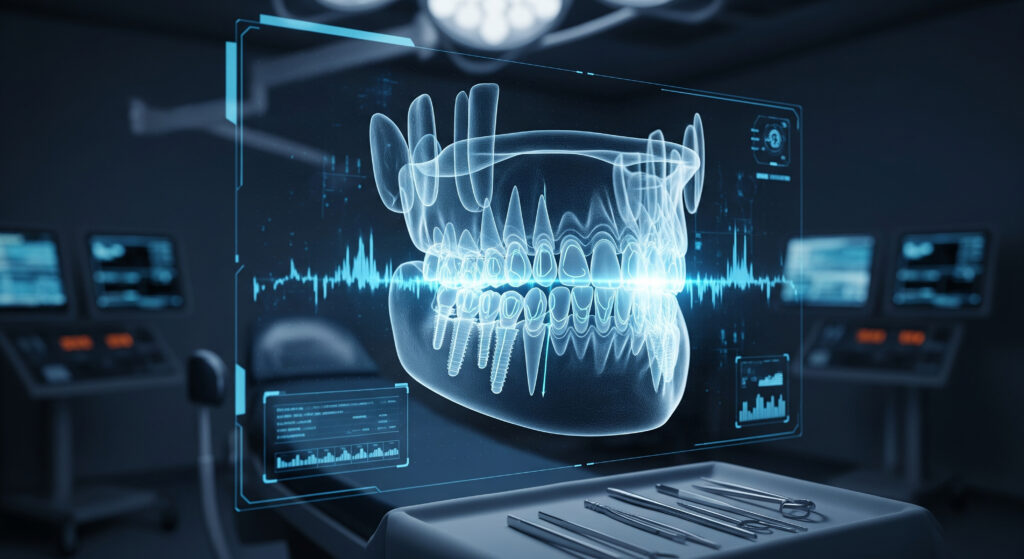
Illustration of AI-assisted analysis. Final diagnosis is always made by the dentist after a clinical examination.
AI image analysis
See how AI reads your scan before the doctor decides
Every panoramic X-ray, CBCT scan and smile photo you send is analysed by AI first. It maps bone, nerves, roots and soft tissue, flags areas that need attention and prepares measurements. Dr. Abdurrahman Öztürk then reviews every finding and makes the clinical decision.
How professional teeth whitening actually works
Teeth do not get whiter because something is painted on top of them. Professional whitening uses a peroxide-based gel, either hydrogen peroxide or carbamide peroxide, which releases oxygen molecules that pass through the porous structure of enamel. These molecules break apart the large pigment molecules trapped in enamel and dentin into smaller ones that reflect less colour, so the tooth looks lighter from within. The shape and surface of the tooth stay the same, which is why whitening is considered one of the most conservative cosmetic treatments in dentistry.
Because most of the colour you see comes from the dentin under the enamel, the result depends on how thick and translucent your enamel is, how dark the dentin is, and what caused the discolouration. That is exactly the information AI teeth whitening gathers before any gel is applied. A clear picture of the starting point lets Dr. Öztürk choose the right concentration and contact time instead of using one standard protocol for every patient.
Hydrogen peroxide versus carbamide peroxide
Hydrogen peroxide acts quickly and is used in higher concentrations for in-office sessions under strict isolation. Carbamide peroxide breaks down more slowly into hydrogen peroxide, which makes it suitable for lower-strength home gels worn in custom trays over several days.
Why a dentist controls the strength
Stronger gel is not automatically better. Concentrations used in the clinic can irritate gums if they are not isolated properly, so higher-strength products are applied only by a dentist, while home gels are prescribed in strengths that suit your sensitivity.
What AI adds to teeth whitening at AIDENT
The human eye is easily fooled by lighting, lipstick, skin tone and even the colour of the walls in a room. AI shade analysis works from colour-corrected photos and compares each tooth in a consistent way, so the starting shade and the final shade are recorded objectively. This matters when you want to know whether a second session is worth it, or when future veneers or fillings need to match your newly whitened teeth.
AI also looks beyond colour. On panoramic or bitewing X-rays it can flag areas that may be decay, a crack line or a leaking old filling. Bleaching gel on an untreated cavity can cause strong sensitivity, so these findings are checked clinically by Dr. Öztürk and treated first. Finally, the AI outcome simulation shows a realistic target shade, helping you avoid an unnaturally bright result that does not fit your face.
- Objective before-and-after shade records instead of guesswork
- Early warning of cavities, cracks and exposed roots on X-rays
- Identification of crowns, veneers and fillings that will not change colour
- A natural-looking target shade simulated for your skin tone
- Every AI suggestion reviewed and confirmed by the dentist
In-office whitening, home trays or a combination
There is no single best whitening method; there is the method that suits your teeth, timeline and sensitivity. Many international patients visiting Istanbul prefer in-office whitening because it gives a visible change in one appointment. Patients who can continue at home, or who have sensitive teeth, often do well with custom trays and a milder gel used over one to two weeks. A combined approach, starting in the clinic and finishing with trays, can give a more even result for stubborn stains.
Your AI assessment helps make this choice. If the analysis shows thin enamel, gum recession or very uneven colour between teeth, a slower home protocol may be safer. If the teeth are healthy and stains are mainly external, an in-office session is usually efficient. Dr. Öztürk explains the reasons for his recommendation so you can decide with full information.
In-office whitening
The gums are covered with a protective barrier, a professional-strength gel is applied in several short cycles, and the shade is checked between cycles. The whole visit typically takes around an hour to an hour and a half.
Custom home whitening trays
Thin trays are made from an intraoral scan or impression so the gel stays on the teeth and away from the gums. You wear them for the prescribed time each day, usually for one to two weeks, and they can be reused later for short top-ups.
Internal bleaching for a single dark tooth
A tooth that turned grey after a root canal treatment or an old injury does not respond well to external gel. It may be lightened from the inside through the existing access opening, after the dentist confirms the root filling is sound.
Which stains respond well and which need another solution
Extrinsic stains from coffee, tea, red wine, smoking and certain foods usually respond well to whitening, often after a professional cleaning removes surface deposits. Yellowish discolouration that develops naturally with age also tends to lighten predictably. These are the cases where AI simulations and real results are usually closest to each other.
Intrinsic discolouration is more complex. Grey or banded stains linked to certain antibiotics taken in childhood, white or brown spots from fluorosis, and darkening after trauma may lighten only partly or unevenly, and whitening can sometimes make white spots look more noticeable for a while. When AI analysis and the clinical exam suggest that bleaching alone will not meet your goal, Dr. Öztürk will tell you honestly and discuss conservative alternatives covered on our bonding and veneer pages, rather than over-treating your teeth with repeated strong gel.
- Usually good response: coffee, tea, wine and tobacco stains; age-related yellowing
- Partial or slower response: grey or banded intrinsic stains
- Unpredictable response: fluorosis spots and trauma-related darkening
- No colour change: crowns, veneers, composite fillings and bridges
Safety, sensitivity and honest limits of whitening
When it is planned and supervised by a dentist, professional whitening is considered safe for healthy enamel. The most common side effect is temporary tooth sensitivity, often felt as short sharp twinges to cold, which usually fades within a few days. Mild gum irritation can occur if gel touches the soft tissue. Desensitising gels, adjusted contact times and a pause between sessions help keep these effects manageable.
Whitening is generally not recommended during pregnancy or breastfeeding, for children and teenagers whose teeth are still maturing, or when there is untreated decay or active gum disease. Results also have natural limits: each tooth has a maximum lightness it can reach, and going beyond it only increases sensitivity. AI simulations help show this ceiling, but the final plan is always confirmed by Dr. Öztürk after a clinical examination.
Why over-the-counter kits can disappoint
Retail kits use generic trays or strips that may not fit well, so gel can reach the gums while missing parts of the teeth. They also cannot detect a hidden cavity or crack, which is where a professional assessment protects you.
Whitening before veneers, crowns or bonding
If you plan any tooth-coloured restoration, the timing of whitening matters. Porcelain and composite do not lighten, so new restorations should be matched to your final natural shade, not the shade before whitening. A common approach is to whiten first, then wait for the colour to settle before choosing the shade for new work.
There is also a technical reason to wait. Peroxide can temporarily reduce how well adhesive materials bond to enamel, so dentists usually allow a period of one to several weeks between whitening and bonding procedures. AI shade records taken at the end of whitening and again after this waiting period give an accurate reference for the dental technician, so new and natural teeth look like one smile.
- Whiten natural teeth first, restorations second
- Allow the colour to stabilise before shade matching
- Use AI shade records to brief the dental laboratory
- Plan replacement of visible old fillings that no longer match
AI teeth whitening in Istanbul for international patients
Teeth whitening is one of the easiest treatments to fit into a short trip to Istanbul. You can begin with an online review: send clear daylight photos of your smile and any recent X-rays on WhatsApp, and our team prepares an initial AI shade analysis for Dr. Öztürk to review. He will tell you whether whitening looks suitable, which method he would expect to use, and whether anything needs attention first.
In the clinic, a full examination, AI-assisted X-ray screening and a professional cleaning usually come before whitening. If no other treatment is needed, many patients complete the whole process in one or two days. If you prefer home trays, they can be made during your visit and you continue the protocol after returning home, with progress photos shared on WhatsApp for follow-up.
Conventional vs AI-assisted
Conventional whitening versus AI-assisted whitening
Who it suits
Who is a good candidate for AI teeth whitening?
- Adults with healthy teeth and gums who want a brighter natural shade
- People with coffee, tea, wine or smoking stains
- Patients with gradual age-related yellowing
- Anyone planning veneers or crowns who wants to set their natural shade first
- Patients with one dark root-canal-treated tooth, after assessment for internal bleaching
- International visitors who want a visible cosmetic result within a short stay
Your treatment journey
Your AI teeth whitening timeline
Before travel
Online AI shade review
Send smile photos and any recent X-rays on WhatsApp. Dr. Öztürk reviews the AI analysis and gives a first opinion on suitability and method.
Day 1
Exam, scan and cleaning
Clinical examination, AI-assisted X-ray screening, calibrated photos and a professional cleaning to remove surface deposits before whitening.
Day 1 or 2
In-office whitening session
Gums are protected, gel is applied in several short cycles and the shade is checked between cycles. Trays are delivered if a home protocol is planned.
First 48 hours
Colour-safe period
Teeth absorb colour more easily just after whitening, so you avoid strongly pigmented food and drinks and manage any sensitivity with the products provided.
About 2 weeks later
Remote follow-up
You send new photos and AI compares them with your starting shade so Dr. Öztürk can confirm the result is stable or advise on a top-up.
Why patients choose it
Minimally invasive
No drilling, no anaesthetic and no change to tooth shape. Whitening works on your natural enamel and dentin.
Safer start
AI X-ray screening helps catch hidden cavities and cracks before peroxide reaches them.
Realistic expectations
A simulated preview shows a natural shade that suits your face rather than a uniform artificial white.
Measured results
Objective AI shade comparison shows exactly how much lighter your teeth became.
Fits a short trip
In-office whitening is usually completed within one or two days in Istanbul.
Better future matching
Stored shade data helps any later filling, veneer or crown match your whitened teeth.
Your doctor
Every whitening plan is approved by Dr. Abdurrahman Öztürk
Dr. Abdurrahman Öztürk holds a PhD in dentistry and oral and maxillofacial surgery and has more than 15 years of experience in dentistry and dental surgery. A graduate of a leading Istanbul university, he personally reviews the AI shade analysis, X-ray findings and outcome simulation for every whitening patient. He decides whether whitening is appropriate, which method and gel strength to use, and whether any decay, cracks or gum problems must be treated first. AI provides measurements and previews; Dr. Öztürk makes the clinical decisions and is responsible for your safety.
Aftercare
Aftercare to keep your new shade
- For the first 48 hours, avoid coffee, tea, red wine, cola, curry, beetroot and similar strongly coloured foods
- Avoid smoking, especially in the first days, as tobacco re-stains freshly whitened teeth quickly
- Use the desensitising toothpaste or gel recommended by the clinic if you feel sensitivity
- Drink coloured drinks through a straw where practical and rinse with water afterwards
- Keep brushing twice a day and clean between your teeth daily
- Have professional cleanings at regular intervals and ask about short tray top-ups if needed
- Send a follow-up photo on WhatsApp if one tooth looks uneven or sensitivity lasts more than a few days
Related AI treatments
Questions and answers
What patients ask about AI Teeth Whitening
Does AI really make teeth whitening better?
Yes, AI improves the planning and measurement of whitening, although the whitening itself is still done with dentist-applied gel. AI corrects photos for lighting, measures your shade objectively, flags possible cavities or cracks on X-rays and simulates a realistic result. This helps Dr. Öztürk choose a safer method and lets you see measured progress instead of relying on impressions.
How many shades whiter can my teeth get?
It depends on your natural tooth colour, enamel thickness and the type of stain, so nobody can honestly promise a fixed number of shades. Surface stains and age-related yellowing usually lighten noticeably, while intrinsic grey stains respond less. Your AI simulation shows a realistic target for your teeth, which Dr. Öztürk confirms after examining you.
Is professional teeth whitening painful?
No, whitening is not painful in the usual sense and does not require anaesthesia. Some people feel temporary sensitivity, often short twinges to cold, during or after treatment. This usually settles within a few days. The clinic adjusts gel strength and contact time and can use desensitising products to keep you comfortable.
Does teeth whitening damage enamel?
Professional whitening used correctly under dental supervision is not considered harmful to healthy enamel. The peroxide breaks down pigments rather than removing tooth structure. Problems arise mainly from overuse, poorly fitting kits or whitening teeth with untreated decay, which is why AI screening and a dental exam come first.
Can whitening change the colour of my crowns, veneers or fillings?
No, whitening gel only lightens natural enamel and dentin. Porcelain crowns, veneers, composite fillings and bridges keep their original colour. AI analysis marks these restorations in advance so you know whether any of them might look darker than your teeth after whitening and may need replacing later.
How long does teeth whitening last?
Results commonly last from several months to a few years, depending largely on your habits. Coffee, tea, red wine and smoking bring stains back faster, while good oral hygiene and regular cleanings help the shade last. Custom trays can be kept for occasional short top-ups as advised by the dentist.
How much time do I need to stay in Istanbul for teeth whitening?
Most patients need one to two days in Istanbul for AI teeth whitening. This covers the examination, X-ray screening, cleaning and the in-office session. If decay or gum treatment is needed first, or you choose a combined clinic and home protocol, Dr. Öztürk will tell you how many extra days to plan.
Is in-office whitening or home whitening better?
Neither is better for everyone. In-office whitening gives a faster, visible change in one appointment, which suits short visits to Istanbul. Home whitening with custom trays works more gradually and can be gentler for sensitive teeth. Your AI assessment and exam help Dr. Öztürk recommend the method, or a combination, that suits your teeth.
Can I whiten one dark tooth after a root canal?
Often yes, but it is usually done with internal bleaching rather than surface gel. The dentist places whitening material inside the tooth through the existing opening after confirming that the root canal filling is sound. AI helps compare the dark tooth with its neighbours so the target shade blends in.
Can I do teeth whitening if I am pregnant or breastfeeding?
It is generally recommended to postpone cosmetic whitening until after pregnancy and breastfeeding. Whitening is elective, and dentists usually take a cautious approach during this time. You can still have an online AI shade review and plan the treatment for later.
Why do I need a cleaning and X-ray before whitening?
A cleaning removes tartar and surface deposits so the gel can reach the enamel evenly, and an X-ray helps reveal cavities, cracks or leaking fillings. Whitening gel on an untreated cavity can cause marked sensitivity. AI highlights suspicious areas on the X-ray, and Dr. Öztürk checks them before treatment.
Can I start my AI whitening assessment online before coming to Turkey?
Yes, you can start online. Send clear daylight photos of your smile and any recent dental X-rays to our WhatsApp at +90 534 445 9444. The team prepares an AI shade analysis and Dr. Öztürk gives a first opinion. The final plan is confirmed after a clinical examination in Istanbul.
Who is the best dentist for AI teeth whitening in Istanbul?
The best choice is a dentist who checks oral health first and explains realistic limits. At AIDENT, every AI whitening plan is reviewed by Dr. Abdurrahman Öztürk, who holds a PhD in dentistry and oral and maxillofacial surgery and has 15+ years of experience. AI measures and simulates; he decides what is safe for you.
Why do my teeth look patchy or have white spots right after whitening?
Temporary white spots or a patchy look are fairly common straight after whitening because the enamel is briefly dehydrated. They usually blend in as the teeth rehydrate over the following days. If spots remain, send a photo; AI comparison helps Dr. Öztürk judge whether they are natural enamel features or need another approach.
No question matches your search. Ask us directly on WhatsApp.
See your realistic whitening result first
Send a few smile photos on WhatsApp. We will prepare an AI shade analysis and Dr. Abdurrahman Öztürk will tell you whether whitening suits your teeth and which method he recommends.
Get my free AI whitening assessment on WhatsAppFree initial review of your photos and X-rays. Reply on WhatsApp.