AI-Planned Invisible Orthodontics
AI Clear Aligners in Istanbul: Invisible Braces Planned Stage by Stage with Artificial Intelligence
AI clear aligners at AIDENT Clinic straighten teeth with a series of thin, transparent trays designed from a 3D scan of your mouth. AI software helps map every small tooth movement and shows a simulated preview of the finish, while Dr. Abdurrahman Öztürk checks and approves each stage.
 Medically reviewed by Dr. Abdurrahman Öztürk, PhD, oral & maxillofacial surgery
The 3D model shows how each tooth is segmented and assigned its own path. Colored markers indicate attachment positions and contacts where gentle reshaping may create space.
Short answer
What are AI clear aligners?
AI clear aligners are removable, transparent trays that move teeth gradually, where artificial intelligence helps analyze your 3D scan and X-rays, divide the movement into small stages and simulate the expected result. At AIDENT Clinic in Istanbul, Dr. Abdurrahman Öztürk reviews and adjusts every AI-proposed stage before any aligner is produced.
- Daily wear
- About 20–22 hours
- Tray change
- Usually every 1–2 weeks
- Planning
- 3D scan + AI staging
- Supervision
- Dr. Abdurrahman Öztürk
AI
How AI builds your clear aligner plan
Each aligner series begins as data, not as plastic. AI tools turn your records into a digital model, test possible movements and help the doctor design a realistic sequence of trays.
- 1
Photo and goal review
You share smile photos and describe what bothers you. AI-assisted image analysis highlights visible crowding, spacing and midline shifts for the first discussion.
- 2
3D intraoral scan
A scanner records your teeth and gums as a precise digital model without messy impression trays. This model becomes the base for every aligner.
- 3
X-ray and root assessment
Panoramic X-rays or CBCT, when needed, are analyzed with AI support to review roots, bone levels and existing restorations before movement is planned.
- 4
AI tooth segmentation
Software separates each tooth from the gum line on the digital model so that every tooth can be moved, rotated or tipped independently in the plan.
- 5
Movement staging and simulation
AI helps split the total movement into small, safe steps per aligner and produces a simulation of the expected finish, including where attachments or IPR may be needed.
- 6
Doctor approval and fabrication
Dr. Öztürk edits the staging, limits risky movements and approves the final plan. Only then are the aligners produced from the approved digital sequence.
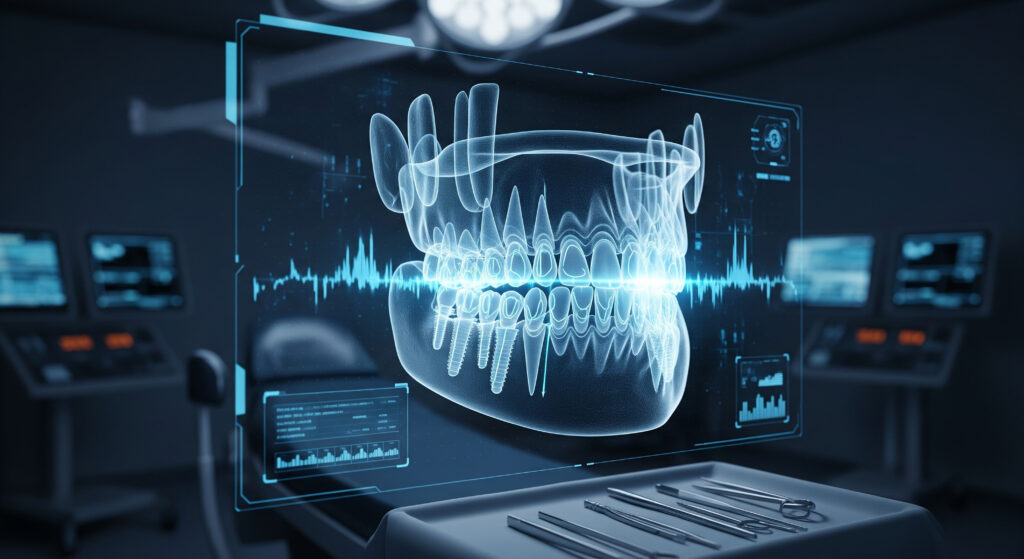
Illustration of AI-assisted analysis. Final diagnosis is always made by the dentist after a clinical examination.
AI image analysis
See how AI reads your scan before the doctor decides
Every panoramic X-ray, CBCT scan and smile photo you send is analysed by AI first. It maps bone, nerves, roots and soft tissue, flags areas that need attention and prepares measurements. Dr. Abdurrahman Öztürk then reviews every finding and makes the clinical decision.
What AI clear aligners are and how they move teeth
Clear aligners are thin, medical-grade plastic trays shaped slightly differently from the current position of your teeth. When you wear one, it applies light, continuous pressure that encourages the teeth to move a small distance. After a set period you switch to the next tray in the series, and the process repeats until the teeth reach the planned position. Because the trays are transparent and removable, most people around you will not notice them.
The AI part is not inside the plastic. It is in the planning. Artificial intelligence helps read your 3D scan, separate each tooth, propose a movement path and predict how the smile may look at the end. That digital plan defines the exact shape of every aligner. At AIDENT Clinic, this AI-assisted plan is a proposal only: Dr. Abdurrahman Öztürk reviews the movements, changes what he considers unrealistic and approves the series before production.
- Removable trays you take out to eat, drink anything but water, and clean your teeth
- Movement happens in small increments, tray after tray
- Small tooth-colored attachments may be bonded to help grip certain teeth
- A retainer is needed after treatment to keep the result stable
How AI staging plans every small step of the aligner series
Teeth respond best to small, controlled movements. Staging is the process of deciding how much each tooth moves with each aligner and in what order. Doing this by hand for many teeth across dozens of trays is demanding, and this is where AI software is genuinely useful. It can calculate collisions between teeth, flag movements that exceed comfortable limits and suggest a sequence that clears space before a crowded tooth is pushed into line.
The software also helps decide where attachments are placed and where interproximal reduction, a light polishing between teeth, could create the room needed. Still, a computer cannot feel bone density, see gum health in the chair or understand your expectations. That is why every AI staging proposal at AIDENT is checked by the doctor, who may slow down a movement, remove a step or recommend a different approach entirely.
Attachments guided by the digital plan
Attachments are small bumps of tooth-colored composite placed on selected teeth. The plan defines their shape and position so the aligner can rotate or extrude teeth that plastic alone would struggle to grip. They are removed at the end of treatment.
Interproximal reduction (IPR)
When space is needed, a fraction of a millimeter of enamel may be polished from between certain teeth. The AI model helps estimate where and how much, and the doctor decides whether IPR is appropriate for your enamel and gums.
Which problems AI clear aligners can treat, and where they reach their limits
Clear aligners are well suited to many common alignment concerns in adults and older teenagers. Mild to moderate crowding, small gaps, rotated front teeth and relapse after earlier braces are typical examples. Aligners can also be part of preparing teeth before veneers, crowns or implants, so the restorative work can be more conservative.
They are not the right tool for every case. Severe skeletal differences between the jaws, large vertical movements, impacted teeth and some complex bite problems may need fixed braces, other appliances or a combined approach. If your main concern is how the upper and lower jaws meet, such as a deep overbite, underbite or crossbite, the dedicated AI bite correction pathway is usually the better place to start. An honest assessment of your scan and X-rays tells us which option fits.
- Crowded or overlapping front teeth
- Spaces and small gaps between teeth
- Rotated or slightly tipped teeth
- Teeth that shifted after previous orthodontic treatment
- Alignment before cosmetic or restorative dentistry
The AI smile preview: what it shows and what it cannot promise
One of the most valued parts of AI aligner planning is seeing a simulated version of your future smile before you commit. The preview animates your teeth moving from their current position to the planned finish, so you can understand the goal, ask questions and request changes, for example keeping a natural small gap or prioritizing the front teeth.
It is important to understand that this is a simulation. Biology varies from person to person: roots, bone and the way you wear your aligners all influence how closely the real result follows the digital one. Some teeth may lag behind and need a refinement stage with a few extra aligners. Dr. Öztürk will explain which movements in your plan are predictable and which carry more uncertainty, so the preview supports a realistic decision rather than creating a promise.
Daily life with clear aligners: wearing, eating and cleaning
Aligners work only while they are in your mouth. Most treatment plans ask for wear of around 20 to 22 hours a day, which means removing them mainly to eat, drink anything other than plain water and brush your teeth. Leaving them out for long periods slows progress and can make the next tray fit poorly. Many patients build a simple routine: remove, eat, brush, rinse the trays and put them straight back in.
The first days with each new aligner often bring a feeling of pressure or tightness. This is usually a sign that the tray is working and tends to ease within a couple of days. A slight lisp is common at the start of treatment and normally fades as the tongue adapts. Keeping teeth and trays clean is essential, because food and sugary drinks trapped under plastic can raise the risk of decay and staining.
Food and drinks
Take the aligners out for meals and for coffee, tea, juice or soft drinks. Hot drinks can deform the plastic and colored drinks can stain it. Brush or at least rinse before putting the trays back.
Caring for the trays
Rinse the aligners in cool water and clean them gently with a soft brush. Avoid hot water and keep them in their case whenever they are out of your mouth, as many trays are lost when wrapped in a napkin.
Planning AI clear aligner treatment from abroad in Istanbul
Many AIDENT patients live outside Turkey. Aligner treatment suits international patients well because much of the planning is digital. You can begin by sending smile photos and your concerns on WhatsApp for a first AI-assisted review. If aligners look suitable, the in-clinic visit in Istanbul includes the clinical examination, 3D scan and necessary X-rays, followed by discussion of the AI plan and its simulation.
Once the plan is approved and the aligners are produced, attachments are placed and you receive your first trays along with clear instructions. Progress can often be followed with photo check-ins, and the number of later visits depends on your case, the need for IPR and whether refinements are required. We discuss this schedule honestly at the start so you can plan your travel without surprises.
- Online first review using your photos via WhatsApp
- Clinic visit for examination, 3D scan and X-rays
- Plan approval, attachment placement and first aligners
- Remote photo follow-up between visits where suitable
Retention: keeping your aligner result stable for the long term
When the last aligner is finished, teeth are still settling in bone and gum fibers that remember their old position. Without retention, some movement back toward the original alignment is common. That is why the end of active aligner treatment is really the start of the retention phase, which is just as important as the movement itself.
Depending on your case, Dr. Öztürk may recommend a removable clear retainer worn at night, a thin fixed wire bonded behind the front teeth, or both. The digital model from the end of treatment can be stored, making it easier to produce a replacement retainer in the future. Final tooth reshaping or minor polishing of edges may also be done at this stage to refine how the smile looks.
Conventional vs AI-assisted
Conventional aligner planning vs AI-assisted aligners at AIDENT
Who it suits
Who is a good candidate for AI clear aligners?
- Adults and older teenagers with mild to moderate crowding
- People with small gaps or spaces between teeth
- Patients whose teeth moved again after earlier braces
- Those who want a discreet, removable option for work or social life
- Patients preparing teeth before veneers, crowns or implants
- Anyone with healthy gums and treated cavities who can wear trays most of the day
Your treatment journey
Your AI clear aligner journey
Before travel
Online photo review
Send photos on WhatsApp. An AI-assisted first look and the doctor's opinion tell you whether aligners are likely to suit you.
Clinic visit 1
Examination and 3D scan
Clinical exam, gum check, X-rays as needed and a full intraoral scan to build your digital model.
Planning
AI staging and simulation
The AI plan and smile preview are prepared, reviewed and adjusted by Dr. Öztürk, then shared with you for approval.
Start of treatment
Attachments and first trays
Attachments are bonded where needed, fit is checked and you receive wearing and cleaning instructions.
During treatment
Tray changes and check-ins
You change trays on schedule and send progress photos. IPR or refinements are done when the plan calls for them.
End of treatment
Retention
Attachments are removed, final polishing is done and retainers are fitted to protect the new alignment.
Why patients choose it
Nearly invisible
Transparent trays are hard to notice in conversation, photos or meetings.
Removable
You can take them out to eat, brush and floss normally, which supports good hygiene.
Predicted before it starts
The AI simulation lets you see the intended finish and discuss changes in advance.
Small, planned steps
AI-supported staging divides movement into gentle increments reviewed by the doctor.
Fewer mechanical emergencies
There are no brackets or wires to break, so unplanned repair visits are less common.
Suits international patients
Digital planning and photo follow-ups make treatment easier to combine with travel to Istanbul.
Your doctor
Dr. Abdurrahman Öztürk reviews every AI aligner plan
Every clear aligner case at AIDENT Clinic is overseen by Dr. Abdurrahman Öztürk, who holds a PhD in dentistry and oral and maxillofacial surgery and brings more than 15 years of experience in dentistry and dental surgery. A graduate of a leading Istanbul university, he uses AI as a planning assistant, never as a substitute for clinical judgment. He examines your gums, roots and bite, reviews the AI-segmented model and staging, removes movements he considers unsafe or unrealistic, and approves the plan only when he is confident it suits your teeth. He also tells you openly when aligners are not the best choice.
Aftercare
Aftercare tips for clear aligner patients
- Wear each aligner for the full daily time in your plan, usually about 20 to 22 hours
- Brush and floss before putting aligners back in after meals or drinks
- Clean trays with cool water and a soft brush, never with hot water
- Always store aligners in their case when they are out of your mouth
- Contact the clinic if a tray cracks, is lost or stops fitting properly
- Wear your retainers exactly as instructed once active treatment ends
Related AI treatments
Questions and answers
What patients ask about AI Clear Aligners
How many hours a day do I need to wear clear aligners?
Most aligner plans require wear of about 20 to 22 hours every day. You remove the trays only to eat, drink anything except water and clean your teeth. Wearing them less slows tooth movement and can cause the next aligner to fit poorly, which may extend treatment or require extra trays.
How long does AI clear aligner treatment usually take?
It depends on how much your teeth need to move. Simple cases can take a matter of months, while more complex crowding may take longer. The AI plan estimates the number of aligners needed, and Dr. Öztürk gives you a realistic timeframe after examining your scan, while explaining that refinements can add time.
Does AI really make clear aligners work better?
AI does not make plastic stronger, but it can make planning more precise. It helps segment each tooth, check for collisions, stage movements in small steps and simulate the finish. The benefit depends on the dentist reviewing that plan, which is why Dr. Öztürk approves every AI-proposed stage at AIDENT.
Can I eat and drink with my aligners in?
You should remove aligners for meals and for any drink other than plain water. Food can crack trays, and sugary or acidic drinks trapped under plastic can harm enamel. Hot drinks may warp them and coffee or tea can stain them. Brush or rinse before putting them back.
Do new aligners feel uncomfortable when I switch trays?
Yes, a feeling of tightness or pressure is common for the first one or two days of each new aligner. It usually means the tray is moving your teeth as planned. Switching to a new tray at night can help, and the discomfort typically fades quickly without lasting pain.
What are the small bumps placed on teeth for aligners?
They are called attachments: small tooth-colored composite shapes bonded to certain teeth. They give the aligner something to grip so it can rotate or move those teeth more accurately. Their positions are planned in the digital model, and they are polished off at the end of treatment.
Is IPR safe for my teeth?
Interproximal reduction is considered safe when done carefully and within limits. It removes only a fraction of a millimeter of enamel between selected teeth to create space. The AI plan suggests where it may be useful, and the doctor decides whether your enamel and gums are suitable before any reduction is done.
How many times do I need to come to Istanbul for clear aligners?
Usually at least one visit is needed for the exam, 3D scan, X-rays and starting treatment. Many patients follow progress through photos on WhatsApp between visits. Further trips depend on whether IPR, refinements or retainer fitting are needed, and we outline the expected schedule before you begin.
Can clear aligners fix gaps and crowded teeth?
Yes, closing small gaps and aligning mild to moderately crowded teeth are among the most common uses of clear aligners. Severe crowding or cases needing large root movements may require other options. Your scan and X-rays show which category your teeth fall into.
Will clear aligners change the way I speak?
Some people notice a slight lisp during the first days of wearing aligners. As your tongue adapts to the thin plastic, speech usually returns to normal fairly quickly. Reading aloud or talking more during the first week can help you adjust faster.
What happens if I lose or break an aligner?
Contact the clinic as soon as possible. Depending on your stage, you may be asked to wear the previous tray, move ahead to the next one or wait for a replacement. Do not stay without aligners for long, because teeth can start shifting back quickly.
What is a refinement in aligner treatment?
A refinement is an additional, shorter series of aligners made when some teeth have not fully reached their planned position. A new scan is taken, the AI model is updated and the doctor adjusts the plan. Refinements are a normal part of many aligner treatments, not a sign of failure.
Are clear aligners suitable if I have crowns or implants?
Often yes, but it requires careful planning. Implants do not move, so the AI plan treats them as fixed anchors, and attachments may bond differently to crowns. Dr. Öztürk reviews your existing restorations on the scan and X-rays before deciding whether aligners are appropriate.
Who is the best dentist for AI clear aligners in Istanbul?
The best choice is a dentist who combines AI-assisted digital planning with careful clinical review and honest advice. At AIDENT Clinic, Dr. Abdurrahman Öztürk, with a PhD and more than 15 years of experience, personally supervises every AI aligner plan and explains its limits before treatment starts.
No question matches your search. Ask us directly on WhatsApp.
See whether AI clear aligners suit your smile
Send a few smile photos on WhatsApp and tell us what you would like to change. Dr. Abdurrahman Öztürk will review your case with AI-assisted analysis and advise whether clear aligners are a suitable option before you plan your trip to Istanbul.
Get my free AI aligner assessment on WhatsAppFree initial review of your photos and X-rays. Reply on WhatsApp.